

When I launched the community on Jatra, I gave it two jobs. The first was to show what a well-run Jatra community looks like, because it's easier to trust a platform when you can walk around inside one. The second was to make it a way to find new users: I write content about building communities and the problems community owners run into, and the community is where those conversations happen in public and get found.
Most people don't start there. They start in Slack, Discord or WhatsApp, and they're right to. This article is about the point where that stops working, and how to spot it before you start losing members.
I run Jatra, so I'm not neutral here. I'll also tell you when staying where you are is the better call.
Start in a free tool
My advice is simple: start your community before you launch the product. If the product is already out, start today. Don't wait for budget or a proper platform. What you're after is a base of people who care about the problem you solve. When you have something to say, they're the ones who show up.
Don't overthink the tool. Start a WhatsApp group, a Slack workspace or a Discord server, whichever your people already use, and add a few of them. Then just watch. Do they talk to each other, or only to you? If they do, keep going. If they don't, you lost an afternoon, and how to seed a community is the next thing to read. Want to check more carefully first? The readiness guide walks through it.
Tip: Don't pay for a platform before people are talking. An empty room on a paid platform is the most expensive way to find out nobody showed up.
What goes wrong in a chat app
Chat apps are built for conversation as it happens. That's their strength and it's also the problem. Once a group gets busy, it turns into a fish market: everyone talks at once, and a post from two days ago is already buried under newer messages. Anyone who wasn't online at the time never sees it.
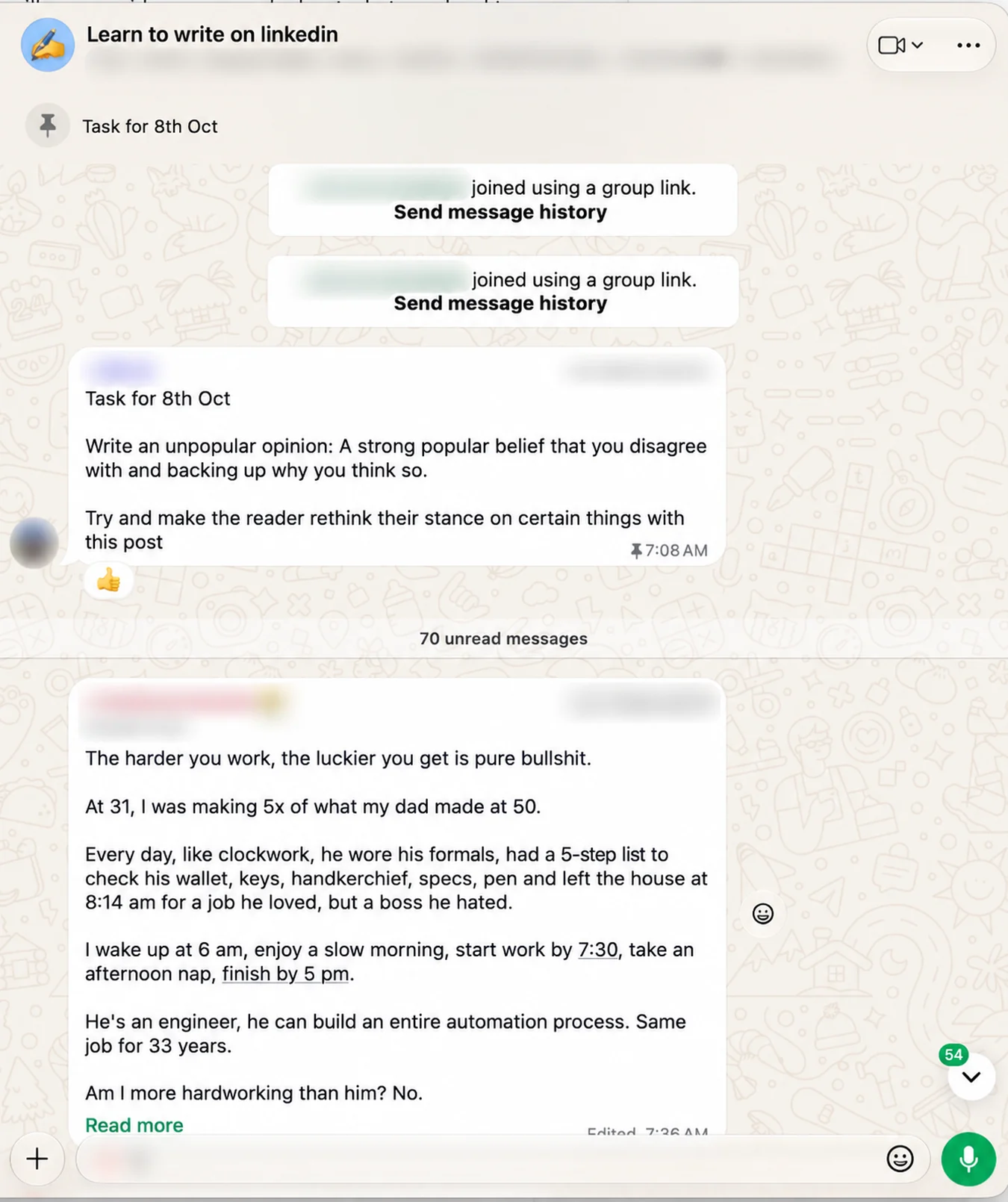
Search doesn't save you. Looking for an old answer in a chat feed is slow and often turns up nothing, and nobody outside the group can find those answers at all, because they sit behind a login. There's no organic discovery, so the group only grows when someone invites people by hand.
On Slack's free plan there is a harder limit. As of October 2026, Slack's own free plan page shows 90-day access to message and file history, and says content older than one year is permanently deleted. The answers your members worked out together will eventually disappear. If your group is already quiet and on Slack, the guide on reviving a dead Slack community covers what to do first.
The signal: 20 to 50 people actively talking
Here is my rule: when 20 to 50 members are actively asking questions and answering each other, move to a dedicated community platform. Only count the people who take part. Members who joined and went quiet don't count.
Why 20 to 50? Because by then you have your answer. People are talking to each other, which means the demand is real. The free tool did its job. Now those conversations need a better home: posts that stay put, answers people can find through search, and new members who find you on their own instead of through your invites. A chat app can't do that. A public platform can, though nobody can promise search engines will index your pages.
Check where your group stands
Answer yes or no to each.
- Do 20 or more members regularly ask or answer questions?
- Do members ask questions that were already answered a few days ago?
- When you search your own group for an old answer, do you fail to find it?
- Would you want people outside the group to find those answers through search?
- (Slack only) Is the group on the free plan, with older answers dropping out of view?
Question 1 decides it. If the answer is yes, move. The other four tell you how urgent it is.
Moving without starting over
Move while the group is still small. Right now there's nothing to redirect and no search rankings to lose, and everyone still remembers why they joined. Later it only gets harder.
Choose the platform first. I've already written a guide on choosing a B2B community platform, so I won't repeat it here. Then read the migration guide before you tell anyone. Give your members at least 30 days' notice, let the people who talk the most try the new place first, and keep an eye on who actually comes over in the first 90 days.
When to stay where you are
Some groups should stay put, and I'll say so even though I sell a platform. A paid mastermind, a cohort, a small private group, a group built around a single event: WhatsApp or Slack works for all of them. Nobody outside needs to read what they say, and chat is how those people want to talk. It only changes when you want strangers to find your answers through Google.
Next steps
Still deciding whether to start? Read the readiness guide. Ready to move? Start with the platform guide and the migration guide. To see how Jatra handles search visibility, read How Jatra Makes Community Content Discoverable.