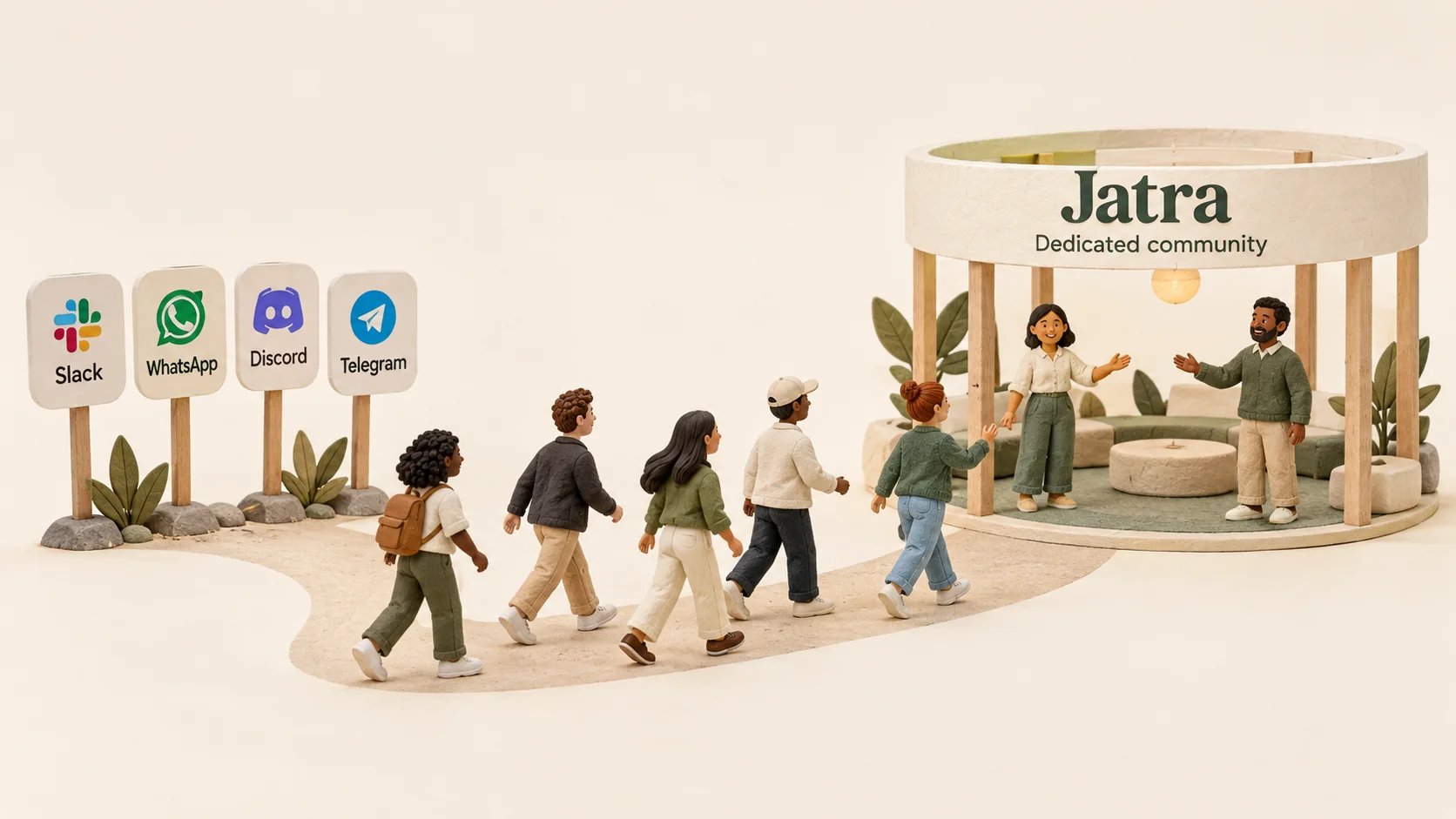

Open almost any Web3 project's Discord or Telegram and you'll see the same thing.
Thousands of members. An announcements channel. The founder, or one or two people from the team, posting updates. And everyone else just watching. Hardly anyone talks to each other. Nobody shares what they know.
That's not a community. That's a broadcast channel with a member count.
I've been building online communities for twenty years. CrazyEngineers has 400,000+ members, and today I build Jatra, a community platform. So yes, I'm biased about platforms, and I'll tell you when that matters. One of our customers, ArtofBlockchain, is a Web3 community that went from zero to over 1,000 members in about a year and a half, without paid marketing. I'll use their story where it helps.
This guide is how I'd build a Web3 community today, one where members actually talk to each other.
New to communities in general? Start with how to build an online community. This guide goes deeper into what's different in Web3.
Why most Web3 communities turn into broadcast channels
Discord and Telegram become the default because founders think people are already familiar with them. Everyone in crypto has an account, so it feels like the easy choice.
But think about what happens next. Scam links. Fake admins sending DMs. Spam bots. Almost every Discord and Telegram community I've seen fights the same battle. It gets spammy, so the team locks channels down, and the community turns into a place where a few people broadcast and everyone else consumes.
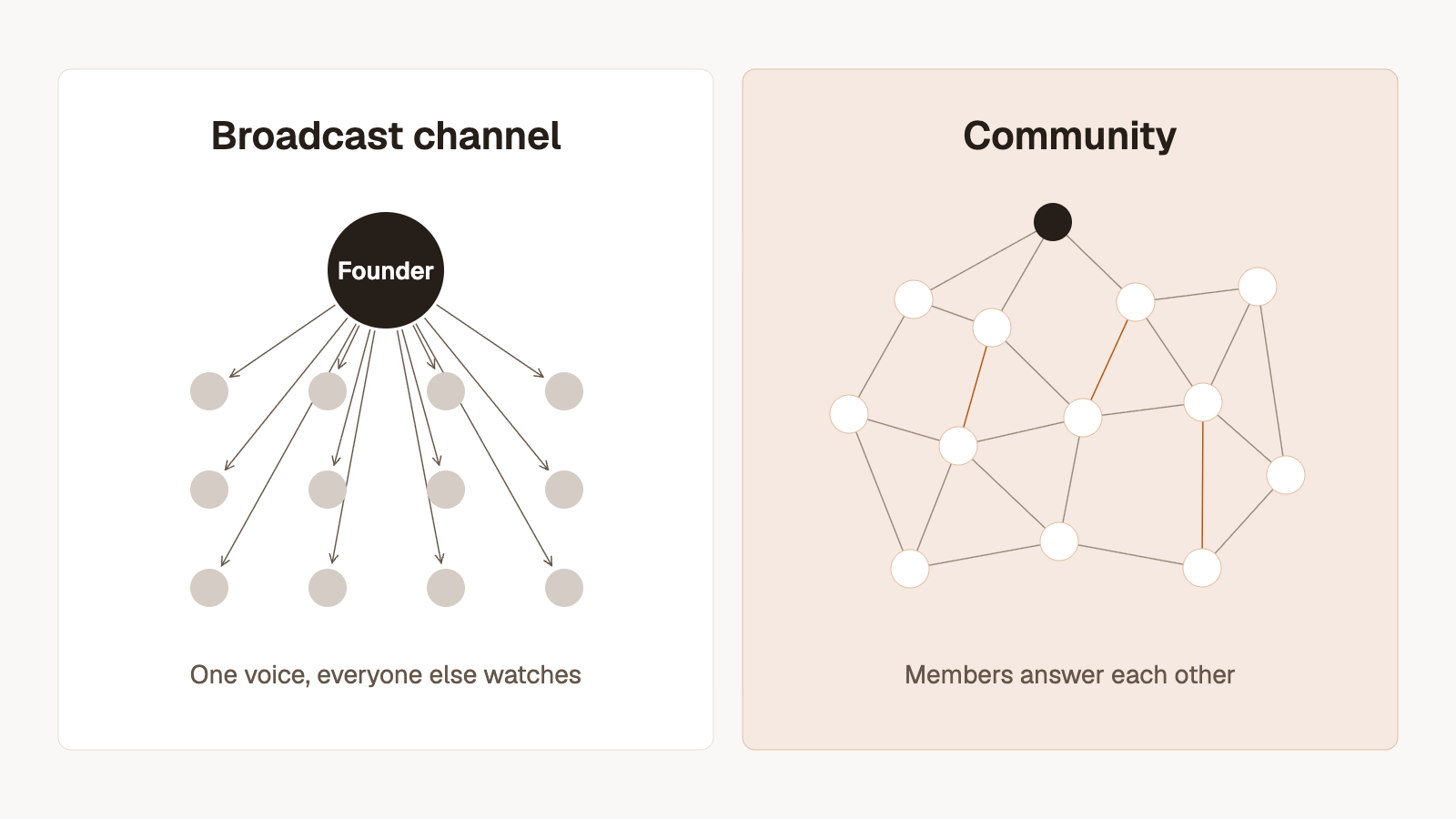
There's hardly any person-to-person conversation, no knowledge sharing, no idea sharing. And that's the part that makes a community worth joining.
So if familiarity is what's driving your platform decision, you're thinking about community the wrong way. People will adopt any platform that gives them value. The real question is how the platform will serve you in the long run.
Know who you're building for
Before you pick anything, get clear on who your members are.
Are they builders? Traders? People trying to get a job in the space? Holders of your token who want to understand what's coming next? Each group wants something very different.
Write down their dreams, goals, fears and pain points. What are they trying to achieve? What keeps them stuck? What are they afraid of getting wrong? Half a page is enough.
ArtofBlockchain's founder did this well. Their members are people who want to build a career in blockchain, at different experience levels. Every one of them has questions, and those questions became the community.
Pick a niche narrow enough to win
"Web3" is not a niche. Neither is "crypto".
There are already huge communities for every chain, every token and every trend. A new one can't win by being general. It wins by going deep on one thing other communities aren't covering properly.
ArtofBlockchain picked one: making a career in blockchain. Not trading tips, not price talk, not news. Just careers. That narrow focus is a big reason the content keeps getting found, because nobody else was answering those questions in depth.
If you run a project, the same rule applies. Don't build a community about "everything around our token". Pick the problem your users actually have. Running a node. Building on your chain. Understanding the governance. Go deep there first, and widen later.
Pick a platform that works for you in the long run
Let's be honest about the closed platforms.
Your Discord server can be taken down overnight, and there's no one to complain to. You can't truly own the data. You can't really know who your members are. And everything useful that gets said is hidden from Google and from anyone who isn't logged in, so the only way to grow is to keep pushing invites.
To be fair, Discord has announced that from November 16, 2026, large public Discoverable Servers get a web page, and some new messages will gradually become searchable from mid-December. It's a step, but older messages and private channels stay hidden, and those pages live on Discord's domain, not yours.
If owning your community matters to you, consider a dedicated platform. One where the public content lives on your own domain, where you can see who your members are, and where you can export everything if you ever need to. On Jatra you can export your whole community from your settings whenever you want.
Spam is the other half of this. On Jatra, new members' public posts are quietly screened for their first 30 days, likely spam is held for review, and you can switch off links until a new member has earned some trust. More on that in moderation and security.
If you're weighing up a move, I've compared the options in Discord vs Jatra and when to move your community off Slack, Discord or WhatsApp.
Seed it with the answers people need
Before you invite anyone, fill the community with answers worth finding.
Start with the questions your members already ask, in your Telegram group, your Discord, your DMs, on X and LinkedIn. Answer them properly, in depth, in public.
For ArtofBlockchain, that meant covering the common questions about building a career in blockchain, at every experience level. Each answer is its own page that anyone can find.
I usually recommend about 50 pieces of content in the first 10 to 15 days. Depth matters far more than volume. The full method is in how to seed a community.
Invite your first batch, and share where you're known
Don't announce it to everyone on day one. Invite in batches.
Start with people you can actually talk to one on one: early supporters, active holders, people who've asked good questions, friends in the space. Give them early access, then watch what they do.
Then share the content where you're already known. ArtofBlockchain's first members came from the founder's own LinkedIn. They created content in the community, shared it on LinkedIn, and that brought a lot of members in. Not spam, not airdrops, not paid ads. Just useful content shared by a real person people already followed.
Watch, listen and refine
After every batch, look at what worked. Which answers got read? What did members ask next? Who came back a second time?
Write what's missing. Then invite the next batch. Keep this loop going for the first few weeks, and you'll have a solid foundation.
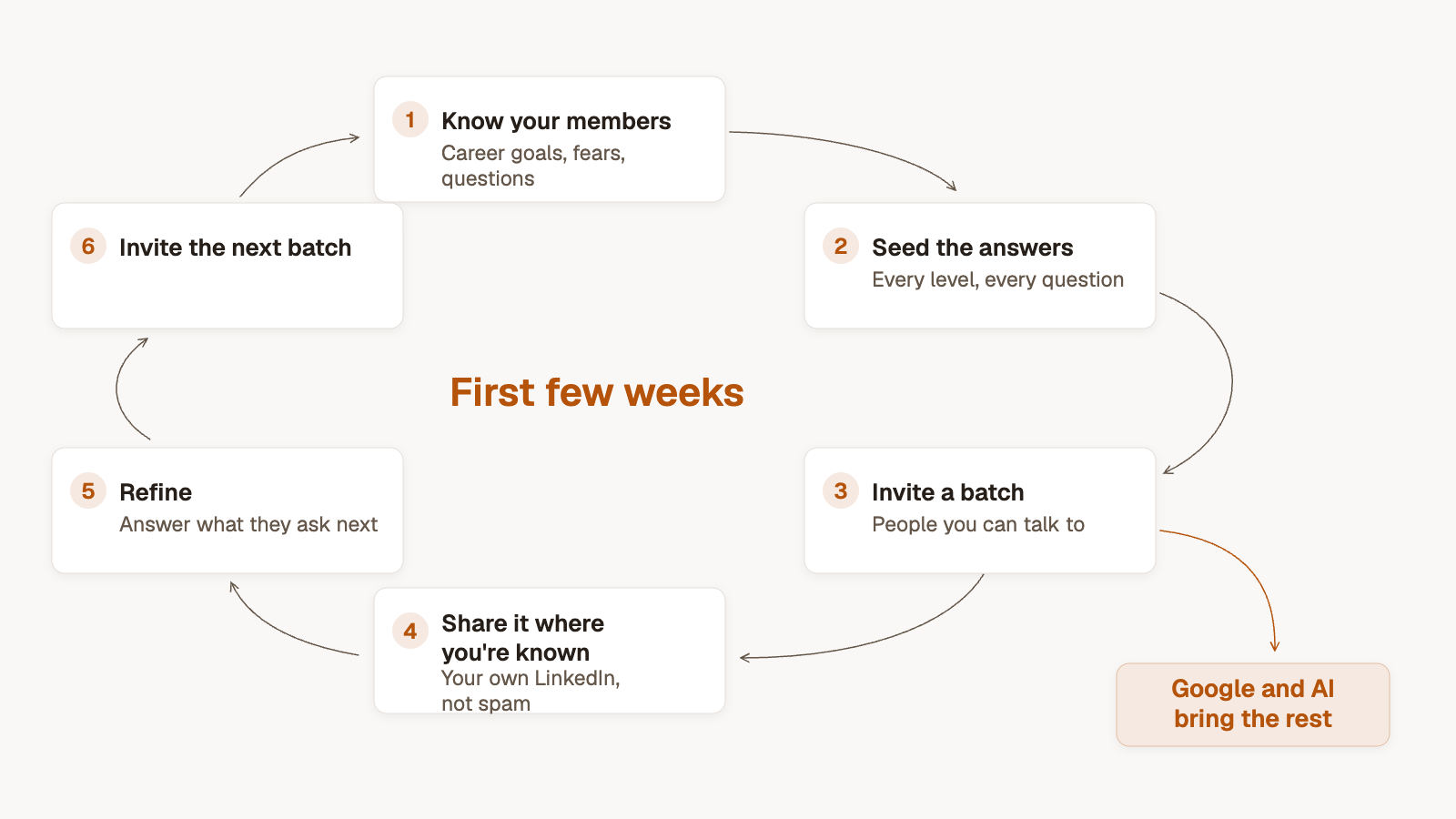
Let Google and AI bring the rest
This is the part a chat server can't do for you.
ArtofBlockchain is indexed in Google. So when someone types a question about a blockchain career, they find an answer in the community, on Google and in ChatGPT. That's become another steady source of new members, and it doesn't depend on anyone sending an invite.
That's how a community grows without paid marketing. Every good answer keeps working long after it's written. Discussions we wrote on CrazyEngineers back in 2010 still bring in hundreds of visitors every month.
Build a knowledge base, not a chat room
Chat is fine. I strongly believe it should be one feature of your community, not the main way members talk.
A good post in a busy channel lasts a few minutes, maybe a few hours. Then it's buried, and you end up repeating the same announcement and answering the same questions again and again.
Think of your community as a knowledge base your members build together, one that compounds over time. Discussions and Q&A, yes. But also articles, guides, events, job posts and resources. In Web3, where people are hungry to learn and the space changes fast, that's what turns visitors into members and members into contributors.
Frequently asked questions
Should a Web3 community be on Discord or Telegram?
Use them for real-time chat if you like, but don't make them the home of your community. They hide your best content from search, they're hard to keep free of spam, and you don't own them. Keep your knowledge on a platform where it's public, permanent and yours.
How do you stop scams and spam in a Web3 community?
Make it hard for throwaway accounts to do damage. Verify sign-ups, screen new members' posts, hold suspicious links for review, and give moderators fast tools to remove a spammer's history. A community where real conversations happen in public threads is also harder to fake than one run through DMs.
How long does it take to grow a Web3 community?
Longer than most founders expect. ArtofBlockchain took about a year and a half to go from zero to over 1,000 members, organically. Patient, compounding growth beats a spike of airdrop hunters who leave next week.
Do you need paid marketing to grow a Web3 community?
No. ArtofBlockchain grew through content shared on the founder's LinkedIn and through people finding answers on Google and ChatGPT. Useful public content does the work that ads usually do.
Where I'd start
If I were building a Web3 community tomorrow:
- Pick one group of people and one problem they keep hitting.
- Choose a platform where your content is public, permanent and yours.
- Write about 50 deep answers before inviting anyone.
- Invite people you can talk to, in small batches.
- Share the content where you're already known.
- Let Google and AI bring the rest.
That's it. Skip the broadcast channel. Build the place where people actually help each other.
If you'd like help building yours, see how Jatra works for Web3 communities, or book a call and tell us what you're building.