

I have moved communities between platforms more than once. To be honest, I have made the mistakes I still see experienced community managers make today.
Community migration is not something you think about every day. Ideally it is a once-in-a-lifetime activity, the thing you do when your existing platform finally fails you. It is easy to migrate when your community has no momentum. Migrating an active community is a different challenge. Without a plan, you risk losing your members and the goodwill you built over years.
No points to me for guessing that you have decided to migrate your community. Your current platform is holding you back, or you are close to deciding.
The hard part of community migration is moving people, not the database. That is the slow, delicate part, far more so than moving posts and other content.
Community Migration is Easy
The good news is that a migration done with a plan is a normal, survivable project. Your fear comes from not knowing the order of operations.
This Guide is not a Technical Resource
This guide walks through that order. It is for the person who owns the community outcome, whether you are technical or not. We are not going to talk about writing scripts, configuring a web server, adjusting DNS, or any of the complex technical work.
What this guide does is prepare you mentally for the hard parts of moving your community. It gives you a clear sequence, the questions to answer at each step, and an honest account of what tends to go wrong, so none of it surprises you.
Who Am I
I am Kaustubh Katdare, founder at Jatra Community Platform. We handle community migrations when clients move their community to Jatra. Over the past 20 years I have had the privilege of migrating communities across most of the popular platforms. This guide compresses nearly 15 years of that experience into something you can act on.
How to Know When It's Time to Migrate Your Community
Migration is expensive in time and attention, so the first job is making sure you actually need to do it. Plenty of platform frustration is solvable without moving. Separate the annoyances from the structural problems first.
A structural problem is one the platform will not fix for you, no matter how you configure it. These are the signals that usually justify a move:
- Your cost scales with member count or admin count. Growing the community makes the bill grow faster than the value it creates. Per-seat pricing is the classic version of this.
- Your community content is invisible to search engines and AI answer engines. Here is a quick test. Can a guest read your community's public content without logging in? If the answer is no, your content is invisible to Google and to the LLMs, and every discussion you host is building nobody's authority. If this is the problem you are trying to solve, start with the forum software SEO audit.
- Your community has hit a feature ceiling. Art of Blockchain, which now runs on Jatra, wanted a job board for their members inside the community. Their old platform could not do it. When the platform cannot model what your community needs, and no add-on closes the gap, you have hit the ceiling.
- The vendor's priorities have changed. Bettermode is a recent example. It retired its free tier in March 2026 and reshaped its plans around enterprise-grade communities. That is a fair business decision on their part, and also a clear signal to a smaller community that it is no longer who the platform is built for.
- Support has gone slow or unhelpful, and problems that hurt your members sit unresolved for weeks. When you cannot get a straight answer or a timely fix from the people you pay, the relationship is already strained, and a community that depends on the platform working cannot carry that for long.
- Your members keep complaining about the same limitation, and you have run out of workarounds.
The trigger can also be platform-specific. If you are migrating off Gainsight Customer Communities, the export is an API extraction project, the passwords still reset, and the old slug-plus-ID paths need a hand-built redirect map. That is a different risk profile from moving a forum with a full database dump.
Now the other side. A slow admin panel, a UI you dislike, or one missing integration is usually worth raising with your vendor before you uproot everything. Migration fixes structural problems. It does not fix taste.
One more thing about timing. The best time to migrate is before the pain turns urgent, because urgency forces rushed decisions. If you can see the ceiling coming, plan the move while you still have room to do it calmly.
Choosing a Community Platform You Won't Have to Leave Again
The mistake I see most often is choosing a new platform to solve today's single biggest complaint, then hitting a fresh ceiling a year later. You do not want to run this project twice.
So judge every candidate on the things that are hard to change later, not just the thing annoying you today:
- Content on your own domain, so the authority your community builds belongs to your brand and not the vendor's subdomain.
- Server-side rendered, crawlable content, so search engines and AI engines can actually read your discussions. Run the guest test from the last section on any platform you are considering.
- Distinct content types with proper schema for each, so a Q&A page is marked up as Q&A and an article as an article, instead of everything collapsing into one generic format.
- The full range of content your community needs, not just forums but the surfaces around them: articles, Q&A, events, a job board, a changelog, ideation.
- Portability. Ask how you would get your data out before you put any data in. A platform confident in its value makes leaving easy. If export is painful, you are looking at your next lock-in.
- How the team responds before you are a paying customer. Send real questions during the trial. Watch how fast they reply, how clearly they answer, and whether they solve the problem or dodge it. The attention you get while they are trying to win you is the best it will ever be. If it is slow or vague now, it will not improve once you have committed and your members are depending on it.
If you are weighing specific platforms, I have written honest breakdowns of the common ones, including where each of them beats Jatra:
I would rather you pick the right platform than pick mine for the wrong reason.
Preparing for Migration: The Technical Groundwork
Preparation runs on two tracks at once. One is technical, one is human. Neither waits for the other. This section is the technical groundwork you or your migration partner should finish before a single member notices anything.
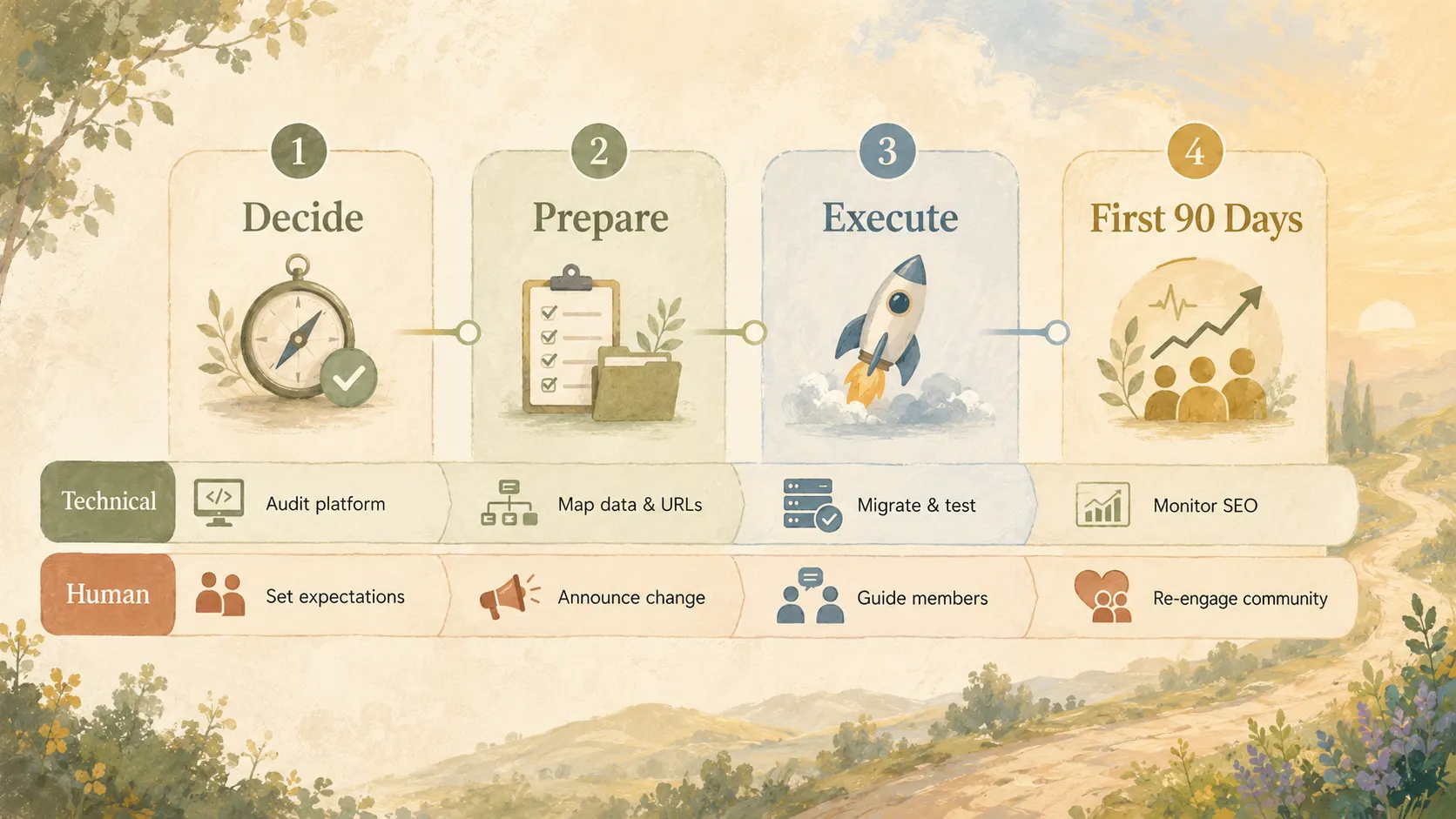
Start by counting what you have. You cannot move what you have not inventoried.
- Export a full list of your content: every thread, article, category, and attachment, with its current URL.
- Export your member list with emails and profile fields.
- Pull your engagement data if the platform lets you, so you know which threads and members actually matter.
That inventory drives two decisions. First, what you leave behind, which is partly an editorial call I will come back to on the human side. Second, your redirect map, which is the single most important technical artifact in the whole migration.
The redirect map pairs every old URL with its new home on the destination. Get it right and your search rankings survive the move. Get it wrong and you lose traffic that took years to earn. That is why redirect planning belongs here in preparation, not on launch day. The mapping is slow, detailed work, and doing it under pressure is how mistakes creep in.
Two more technical jobs live here:
- Run an export dry run early. Do not assume the export button does what you expect. On some platforms the export is JSON that needs custom tooling to become readable. On others it hands you links to files instead of the files. Find out now.
- Stand up a staging copy of the new community and run a trial import with a slice of real data. This is where the ugly surprises show up while they are still cheap.
Let me be straight about those surprises. Off-the-shelf importer scripts get you most of the way, then mangle the last mile. When I moved a community from vBulletin to XenForo, the bulk import ran fine, and then the real work started. We were left with broken URLs, attachments that did not come across, and a set of custom member profile fields the standard importer ignored. Those fields were not decoration. They were how our members identified themselves and found each other, so losing them was never an option.
The lesson stuck with me. Standard importers assume a standard community. Any community worth migrating has been customized well past standard. That gap is exactly where experienced help earns its cost. A migration is a one-time project, so building the skill in-house rarely pays off, and getting it wrong costs you members and rankings. At Jatra we include migration in the engagement for that reason. Whether you work with us or someone else, my advice is the same: hand the technical migration to people who have done it more than once.
Preparing Your Members Before You Move
The technical track can be flawless and the migration can still fail. What actually decides whether you keep your members is how you bring them along. People do not leave over a database migration. They leave because they felt moved without warning, or because the new place felt cold, or because logging in became a chore and nobody told them why it was worth it.
Give people time and honesty. My rule is at least 30 days of notice before anything changes.
- Announce the move early and explain the why in plain language. Members forgive a lot when they understand the reasoning.
- Do not lean on an in-community banner alone. Email every member directly, at least twice. The people most likely to drift are the ones who have already stopped logging in, and they will never see a banner. For a community over a thousand members, give yourself a longer runway, around 45 days, and send a reminder roughly every 10 days so the message reaches people whatever their check-in habit.
- Write an FAQ that answers the real questions. Will I lose my history? Do I need a new password? What happens to the features I use most? What changes about how I log in?
- Say clearly what you are leaving behind. If you are pruning old content or dropping a feature, name it. People handle known losses far better than surprises.
Then bring your most important members in before everyone else. Every community has a core: the people who answer questions, set the tone, and hold the culture. Their buy-in is the whole game.
The highest-leverage move in the entire migration is giving those core members a private preview before anyone else sees the new community. When your most trusted members have already walked the space, formed an opinion, and started posting, everyone else arrives to a place that already feels endorsed and alive. Their confidence becomes the wider community's confidence. A platform that launches with your core already active and vouching for it is a far easier sell than one nobody has tried yet. Do this one thing well and you protect your member count more than any other single step. Treat it as the heart of your preparation, not a nice-to-have.
Around that preview:
- Ask for their input while it still matters, so they feel like co-owners of the move and not passengers.
- Make them feel it. A sneak peek, an early badge, a founding-member note on the new platform. People remember being treated as insiders.
I watched this work on a migration I helped run for a large, tight-knit enthusiast community. The owner refused to rush. They brought their most active members in first, handed them the new community to review, listened to the feedback, and only then moved everyone else across in phases. By the time the general membership arrived, the people they trusted were already settled and already positive. Because the move happened in stages, the few problems that surfaced hit a small and forgiving group first, not the whole community on day one.
Migrating the Data Without Losing Your Search Rankings
When migration day comes, the technical work is mostly the payoff of good preparation. The database migration runs against the plan you already built. Your team moves the content, members, and attachments into the destination, using the staging trials to dodge the surprises you already caught.
The part that protects your traffic is the redirect layer:
- Put your 301 redirects live so every old URL points to its new home. A 301 tells search engines the move is permanent and passes the ranking value to the new page. This is what carries your authority across.
- Plan for the URLs with no clean match. Some old pages will not map one to one. Decide in advance whether they redirect to the nearest relevant page or return a proper 404, and make that 404 page genuinely useful with search and navigation instead of a dead end.
- Verify after launch. Crawl the new site, confirm the redirects resolve, and hunt for broken internal links.
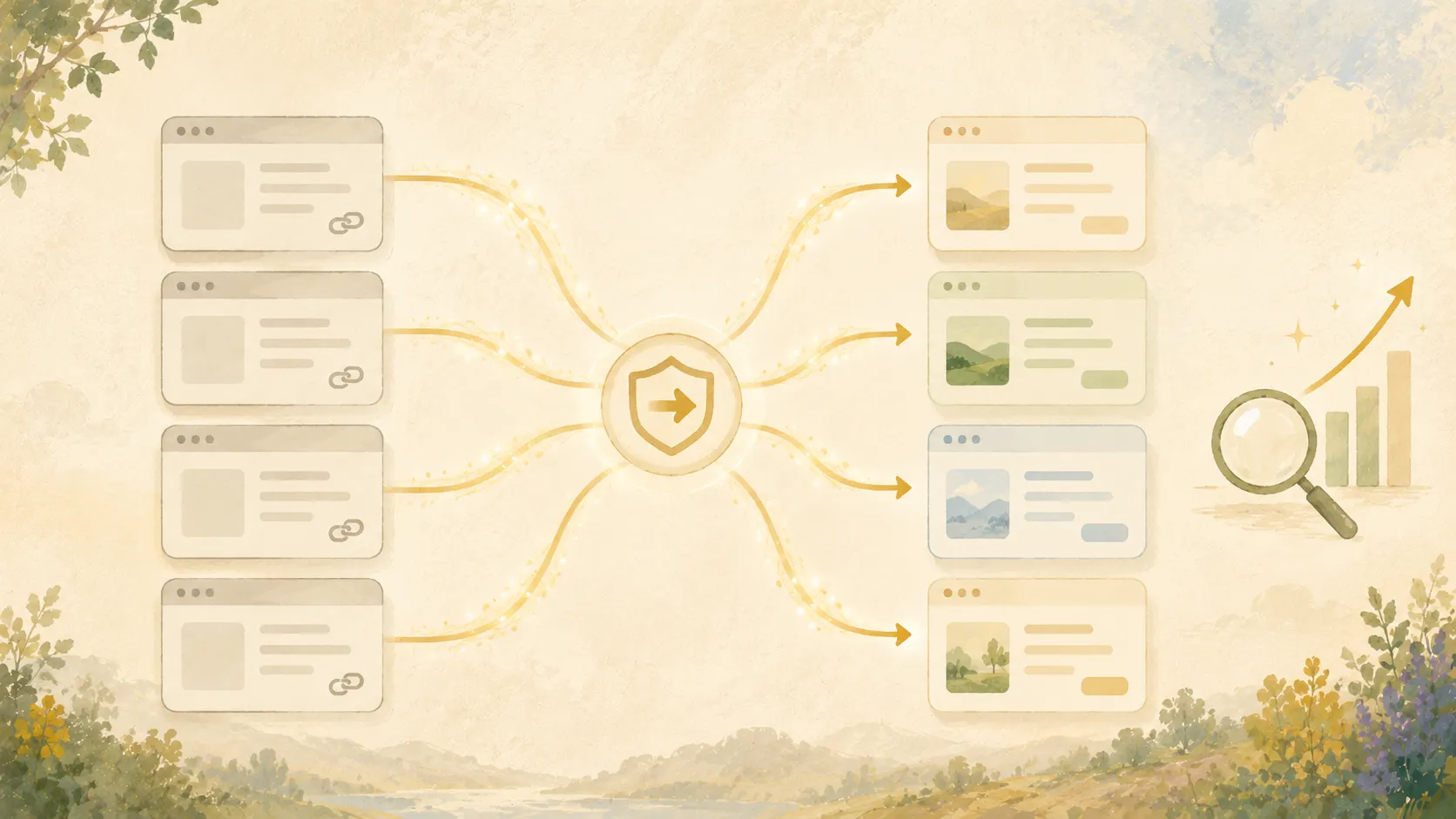
Be realistic about recovery. Even with a clean redirect map, search engines need time to recrawl and reassign authority. Expect roughly three to six months for rankings to settle. That dip is normal and temporary when the redirects are right. It is permanent when they are not. This is the whole reason the redirect map is the most important artifact in the project.
Moving Your Members Without Losing Them
The human side of launch is where I would spend most of my attention. The data will be fine. The people might not be.
Avoid a single hard cutover if you can. A gentler path keeps more people:
- Soft launch to your core members first, the same group you previewed with. Let them shake out the rough edges and seed activity so the new community does not feel empty on day one.
- Run both platforms in parallel for a short window if you can, so nobody feels locked out mid-move. Set a firm end date for the old one.
- Be honest about re-onboarding. On almost every migration, passwords do not transfer, so every member has to reset their login on arrival. This is where communities bleed people. A login hurdle on a low-motivation day is enough to lose a casual member. Warn them it is coming, tell them it takes 30 seconds, and make the first thing they see after logging in worth the effort.
The re-onboarding step is a bigger deal than it looks. Documented churn on community migrations tends to land between 5% and 20%, and most of it has nothing to do with the platform. It is people who were loosely attached, hit one small hurdle, and quietly drifted. You cannot save all of them. Warm communication and a strong first impression save most of them.
Hold one-to-one sessions with your top contributors through the move. Fix bugs fast and visibly, because early responsiveness signals that the new place is cared for. Collect feedback in the open and act on the easy wins quickly. Whatever momentum you set in the first two weeks tends to become your new baseline.
The First 90 Days on Your New Platform
Migration does not end on launch day. The first 90 days are when you find out whether it worked, and a little vigilance here protects everything the move was for.
On the technical side, watch Search Console. Look for spikes in 404s, crawl errors, and redirects that are not resolving, and fix them quickly while the search engines are still recrawling. Keep an eye on rankings and hold your nerve through the settle period instead of panicking at the expected dip.
On the human side, keep the energy up. A new community can feel quiet at first simply because habits have not re-formed. Seed discussion, prompt your core members, celebrate the early activity, and keep fixing the small things people report. The first month usually sets the tone for everything after.
Once things are stable, do the debrief. Note what went well and what you would do differently, and put real numbers next to it by comparing your engagement and growth against where they were before the move. If you have not settled on what to measure, I put together a breakdown of the community KPIs worth tracking by stage that works as a starting point. If you ever migrate another community, or advise someone who is about to, that record is worth more than any guide.
You Don't Have to Do This Alone
Migration looks frightening from the outside because it bundles two hard things: a technical move and a human move. Separate them, sequence them, and most of the fear drains away. Hand the technical work to people who have done it before. Give your members honesty and time. Protect your rankings with a redirect map you built without pressure. Communities survive this all the time. Yours can too.
If you want to talk through a specific move, or you would rather hand the technical side over end to end, that is exactly what we do at Jatra.