

CrazyEngineers was funded by ads - for almost 15 years. It started with Google approving our AdSense account, and then we got direct advertisers. We then got one big ad partner that brought in 75 to 80% of our revenue.
...and then one mail, and almost 70% of it was gone. Read the entire story here.
Now that I look back at my own journey, I'd not monetize my community with ads. I may, but I'd NEVER rely on just one partner to bring in the revenue.
"Kaustubh, how can my community make money?" - I get that question a lot. I'm therefore putting together all the ways I know a community can make money.
Some of these I've used myself, some I've watched work in communities I helped grow, and some I wish I'd started much earlier. This guide covers all of them - and the one thing that decides how much any of them will earn: whether people can find your community in the first place. I've talked a lot about building hybrid communities - the ones that have public as well as private content.
Two kinds of community money
Before you pick a model, be absolutely clear about what kind of community you're running.
An independent community makes money directly. Members, sponsors or advertisers pay, and that money is the business. CrazyEngineers was one.
A business community usually doesn't charge anyone. A customer community for a SaaS product or a brand community makes money indirectly - fewer support tickets, customers who stay longer, better product feedback, and new people finding your product through the answers your customers write. The business case for a community covers how to put numbers on that.
Most of this guide is about the first kind. If you run the second, jump to when your community is part of a business.
1. Advertising
Ads are the easiest money a community can make, and the most fragile. Yep, I said that.
When I went full time on CrazyEngineers, AdSense paid us about $100 to $120 a month. As traffic grew, advertisers like Siemens, Texas Instruments and Quick Heal started reaching out to us on their own. We never did any outbound sales.
The catch is simple. Ad money follows your traffic, and your traffic follows Google. Our revenue swung by almost 50% from the peak. You can't hire, expand or invest with confidence when next quarter depends on the next Google update.
Ads work as a bonus on top of something steadier. Never as the foundation. It's a question that keeps coming up on Jatra Community too: ads or paid membership?
2. Sponsors and partners
A sponsor pays to reach your members specifically: a sponsored newsletter, a sponsored event, or a partner deal like the one we had with IEEE GlobalSpec, which brought US electronics brands onto an engineering community run from India.
Sponsors usually pay better than ads, because they want your exact audience.
My rule now: never let one sponsor bring most of your money. Ours grew to 75 to 80% of our revenue, and when they changed one rule, we lost almost 70% of it. Two or three smaller sponsors are worth more than one big one you can't afford to lose.
3. Paid listings and a promotions channel
Members want to promote what they build. Fighting it all the time is a losing battle - so channel it.
In a founders community I helped grow, we gave self-promotion its own channel. Members could advertise their business there for free, and they loved it, because it helped them connect and trade with each other. Then we added paid listings for anyone who wanted more visibility, and that began bringing in revenue. We turned a moderation problem into an income stream.
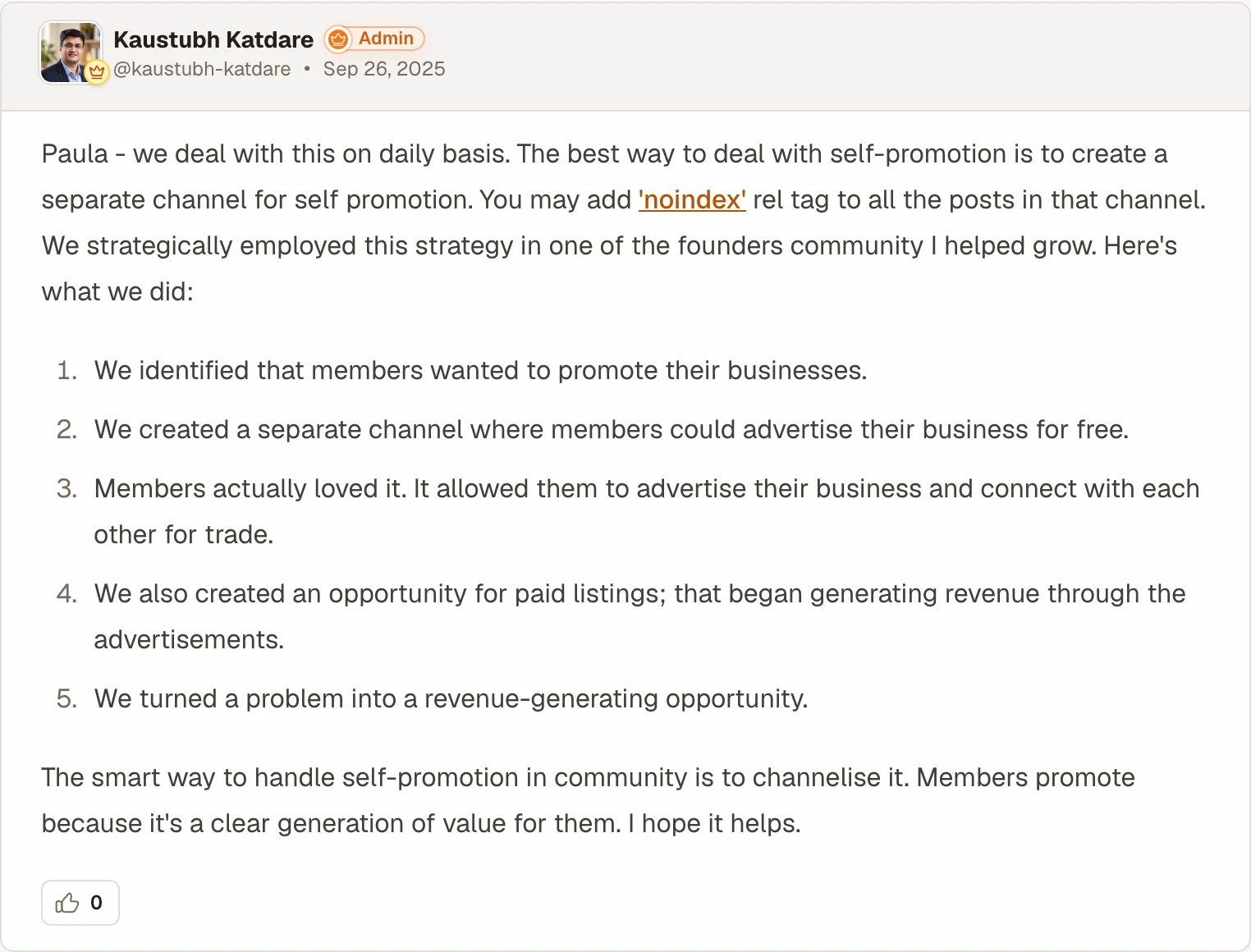
That's my reply to a community manager on Jatra Community who was struggling with self-promotion.
Two things to watch. Keep the promotions channel out of Google with noindex, so your search results don't fill up with ads. And don't let it take over the rest of the community. Put the rule in your community guidelines, so everyone knows where promotion goes.
4. Services your members ask for
Listen to what your members keep asking for. Around 2014, many CrazyEngineers members uploaded their resumes and asked us to review them. That's a service people will happily pay for, again and again.
Your community will have its own version of it - code reviews, portfolio feedback, consulting hours, templates, done-for-you setups. If you run group coaching, the group coaching earnings calculator helps you work out cohort size and fees. The best part is that your members tell you what they want. You don't have to guess.
5. Paid membership
Charge for access: a monthly or yearly fee for a premium tier, a private group or extra perks.
It's the most predictable model, and the membership earnings calculator shows what a paid tier could earn over a year, cancellations included. When I discovered SaaS around 2018, that's exactly what fascinated me - steady monthly revenue you can actually plan around.
But a paywall has a cost. Everything behind it is invisible to Google and AI tools, and that's where most new members come from. So keep the answers public and charge for the extras: live sessions, direct access, templates, a members-only group. That's a hybrid community, and it's how most communities can grow and earn at the same time. Public vs private community covers where to draw the line.
6. Paid content
Some of your best content is worth paying for: in-depth articles, templates, quizzes and practice tests, recordings of live sessions.
Keep your everyday answers public - that's how people find you. Put the premium pieces in a members-only section and charge for access. Your free content does the marketing for your paid content.
7. Courses, cohorts and workshops
If your members come to learn, teach them. A course, a cohort that runs for a few weeks, or a paid workshop on one topic.
The community makes these better. People ask questions between lessons, help each other and stay around after the course ends. Before you build one, run your numbers through the course community ROI calculator.
8. Paid events
Sell tickets to meetups, conferences, workshops and AMAs, or charge for the replays. Events also attract sponsors, so this model often stacks nicely with the second one. The event earnings calculator shows how many tickets you need to break even.
9. A job board
If your community is about a profession, employers want to reach your members. Charge employers to post a job, or to feature their listing at the top.
10. Selling products and services
Sell your own products and services right where your members already are: ebooks, templates, tools, consulting calls. Or let members list theirs.
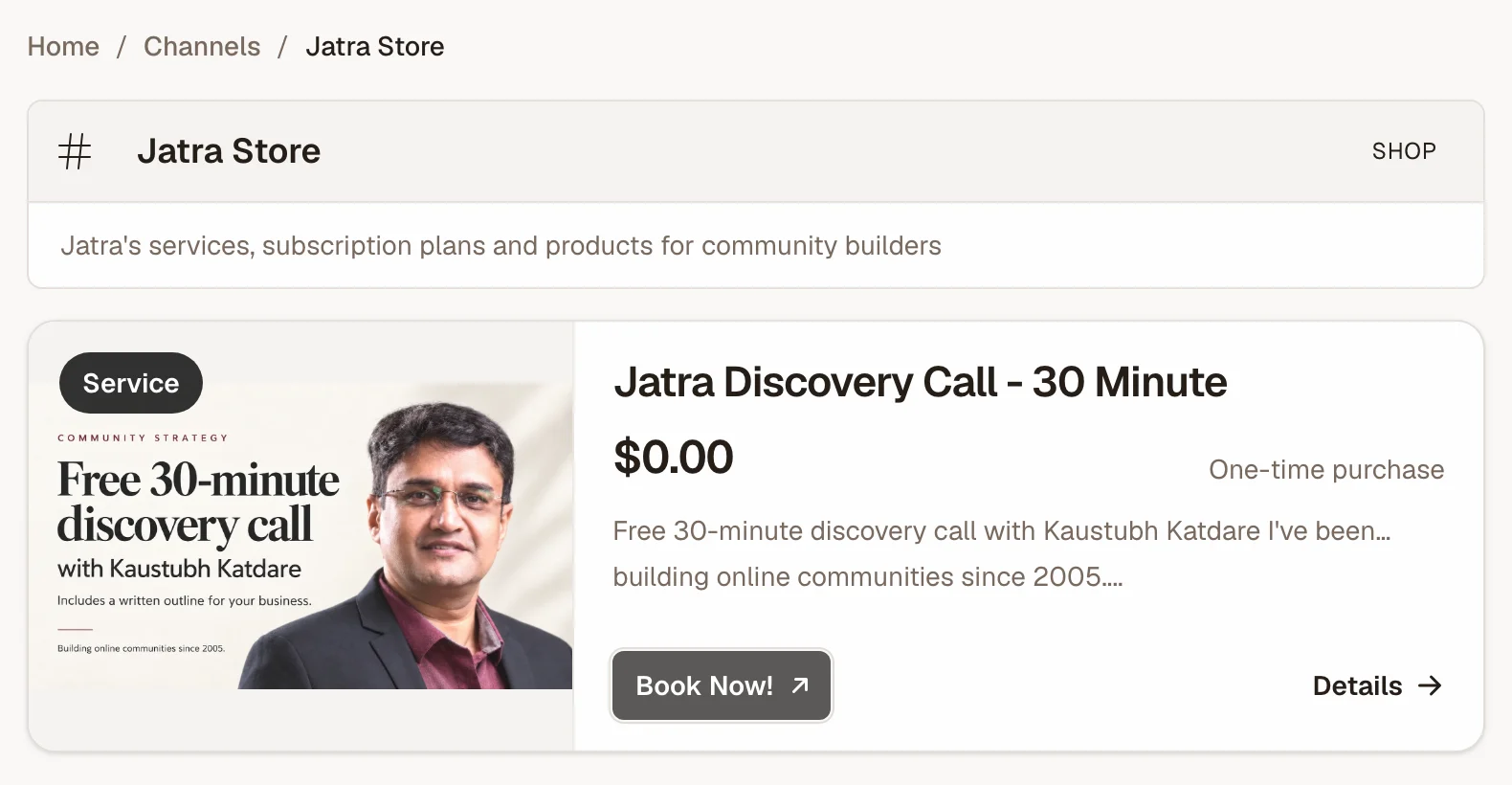
That's the store channel in our own community. Every listing has a price and a button that takes people to wherever they buy or book.
When your community is part of a business
For a SaaS company or a brand, the community rarely charges anyone. It pays for itself in other ways, and the customer community ROI calculator helps you estimate them:
- Fewer support tickets, because customers answer each other.
- Customers who stay longer, because they're invested in the place.
- Product feedback in one place, instead of scattered across emails and calls.
- New customers who find your product through your community's answers on Google and in AI tools.
That last one is the community-led acquisition loop, and it's the one most companies underestimate. How to build a SaaS customer community covers the rest.
Why SEO and AEO decide how much you'll earn
Every model in this guide needs one thing: people. Ads need traffic. Sponsors want reach. A paid tier needs a steady stream of new members. Even a business community needs new people finding it.
The cheapest and steadiest source of new people is search. I never spent a buck on marketing CrazyEngineers. Our members' answers ranked on Google, people found them, and every one of our advertisers reached out to us first. We never had to sell.
And search is changing. People now ask ChatGPT, Perplexity and Google's AI Overviews, and those tools quote real discussions by real people. A community that's open and readable gets cited. A community behind a login doesn't exist for them.
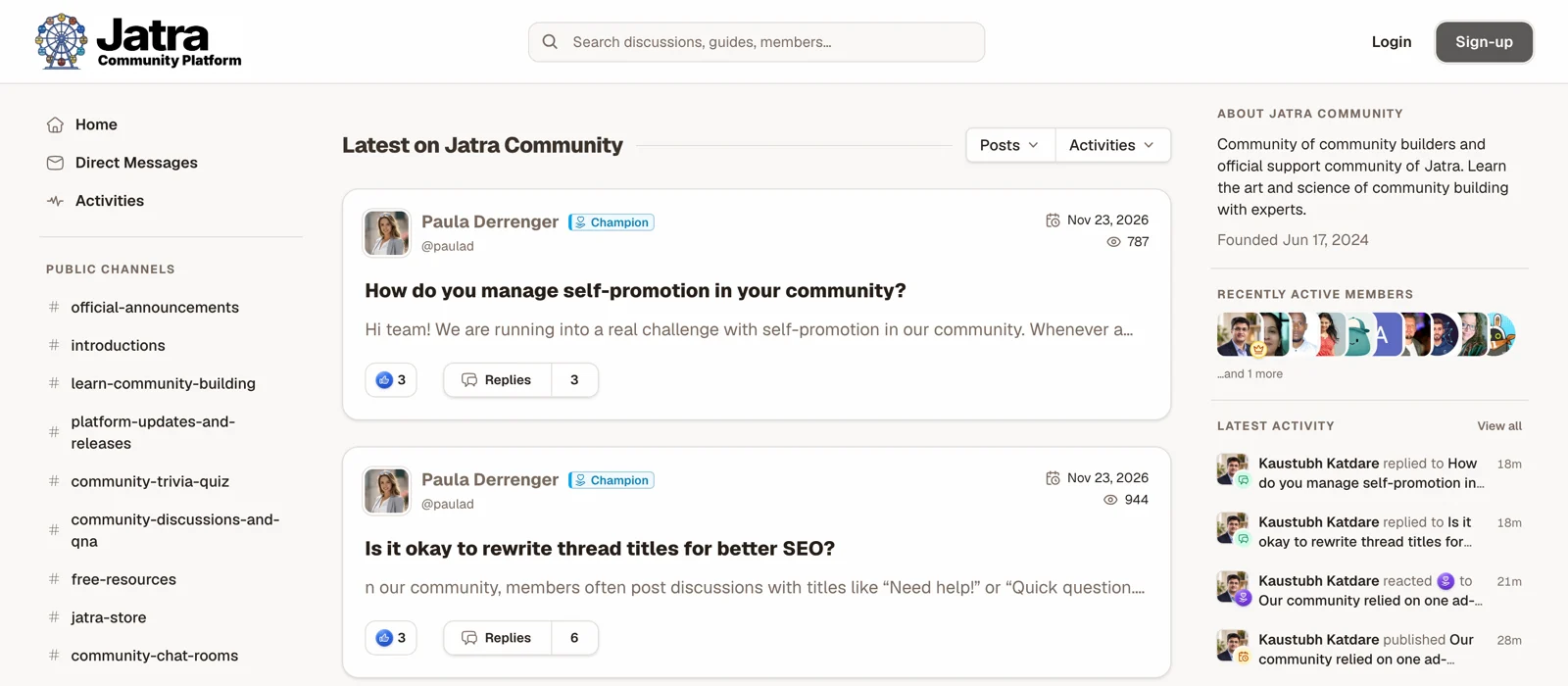
That's our own community as a visitor sees it - signed out, and every public discussion readable. Google and AI tools see the same thing.
That's what SEO and AEO do for your business model. Every good answer your members write keeps bringing people in, for years, for free. Some of those people become paying members, event attendees, a sponsor's audience or your next customers. Community SEO covers how to get found on Google, and how to get your community cited in AI answers covers the AI side.
So before you pick a model, make sure people can find you. Then the money has somewhere to come from. And if Google is ignoring your community today, here's how to find out why.
How to pick your model
Start with what your members already ask for. That's your first product. And if you don't have members yet, build the community first. The money follows the value.
Stack two or three models, and never let one of them bring most of your money. Prefer money that repeats every month over one-off deals. Keep your core answers public and charge for the extras. And add ads last, if at all.
How Jatra helps
- Public discussions are plain HTML that Google and AI tools can read, with structured data and URLs that never change.
- Shop posts let you list a product or service with a price and a button that goes wherever you sell or book.
- Job posts come with a salary field and an apply link, so you can run a job board inside your community.
- Event posts come with RSVPs.
- Private channels keep members-only areas out of Google. Put paid articles, quizzes and resources there, and add the members who've paid.
- Rooms let you run live conversations, and a room can be open only to its own members - handy for paid sessions.
- Quiz posts let you run quizzes and practice tests.
Frequently asked questions
How do online communities make money?
Through ads, sponsors, paid listings, services members ask for, paid memberships, paid content, courses, paid events, job boards and selling products. For a longer list, I've written up 25 community monetization strategies on Jatra Community. Business communities usually make money indirectly, through fewer support tickets, better retention and new customers who find them through search.
What's the best way to monetize a community?
Start with what your members already ask for, and build two or three income streams instead of one. Never let a single sponsor or partner bring most of your money.
Can a free community make money?
Yes. Sponsors, paid listings, events, job boards and services all work while the community itself stays free. Keeping it free and public also brings in the new members every one of those models depends on.
Should I put my community behind a paywall?
Not all of it. Keep the answers public so Google and AI tools can find you, and charge for extras like live sessions, direct access or a members-only group.