

A customer community is a space hosted by a business where customers connect with the company and with each other to ask questions, exchange advice, share feedback, and learn.
Customers may arrive because they need help. What makes the space valuable over time is that some choose to stay and contribute. A customer who answers a stranger's question at 11pm, or posts a screenshot of what they built with your product, is adding something the company could not have written on its own.
That voluntary contribution is what I look for when building a community. Your team can help it happen by answering questions and making people feel welcome. Over time, members have reasons to return beyond resolving their own issue.
The most common confusion: community vs. support
On sales calls, the misunderstanding I hear most often is that a customer community is a support community. A place to deflect tickets.
Support is one job a community does, and it can be a good reason for someone to join. But a useful customer community can also help members get better at the subject that brought them together. The product sits inside that subject.
Take a hypothetical email marketing software company. A support-first community fills up with threads about broken templates and billing questions. A broader customer community is about getting better at email marketing: how to warm up a new sending domain, what to check when campaign results change after a list import, how other marketers structure a welcome sequence. Product questions still come up, alongside conversations people would have joined for anyway.
Booksom is a real example. Booksom sells book-inspired merchandise like candles, coasters, bags and book lamps. Its community, Booksom & Friends, is built around reading. The channels cover book summaries, recommendations, quizzes and member introductions. Members ask which book completely surprised them, or how to get their kids reading instead of watching screens.
The product shows up alongside those conversations. When the Booksom team was considering book-themed board games, they asked members whether they would buy them. That's product feedback, gathered inside a conversation about books.
Disclosure: Booksom's community runs on Jatra. I founded Jatra.
How it differs from a knowledge base, a Slack group and a forum
These terms describe different things: a source of maintained information, a communication tool, and a discussion format.
A knowledge base is usually written and maintained by the company. A customer community also contains contributions from customers: questions the team might not have anticipated, answers from experience, and discussions that can inform future documentation. We cover their roles in customer community vs. knowledge base, help center and customer portal.
A Slack or Discord group is a space for chat, and a customer community can run there. Conversations move fast, and the archive generally sits behind a login rather than on public pages someone can discover through Google. That can suit a private peer group. If public discovery matters, give reusable answers a public home. Our guide to reviving a quiet Slack community covers that choice, including keeping chat alongside a public archive.
A forum is a format, not a purpose. Many customer communities run on forum software. What makes it a customer community is its relationship to the business and the people it serves, not the layout.
Customers aren't the only members
The word "customer" is loose. A useful customer community can also attract people who haven't bought yet.
On Jatra's own community, a founder at a SaaS that had not yet launched asked about a simpler alternative to Bettermode. She wanted to build a developer community and needed help getting started. The answer and follow-up questions happened in public, where the next person evaluating the same choice can read them. She later said she planned to schedule a call with her team.
This question from a prospective customer is already appearing in Google Search. The screenshot below is the actual Search Console snapshot we checked on October 4, 2026. It shows 97 impressions and one click over the selected reporting period. Just one click: it's a small start. An impression means the page appeared in search results; it does not mean someone visited it.
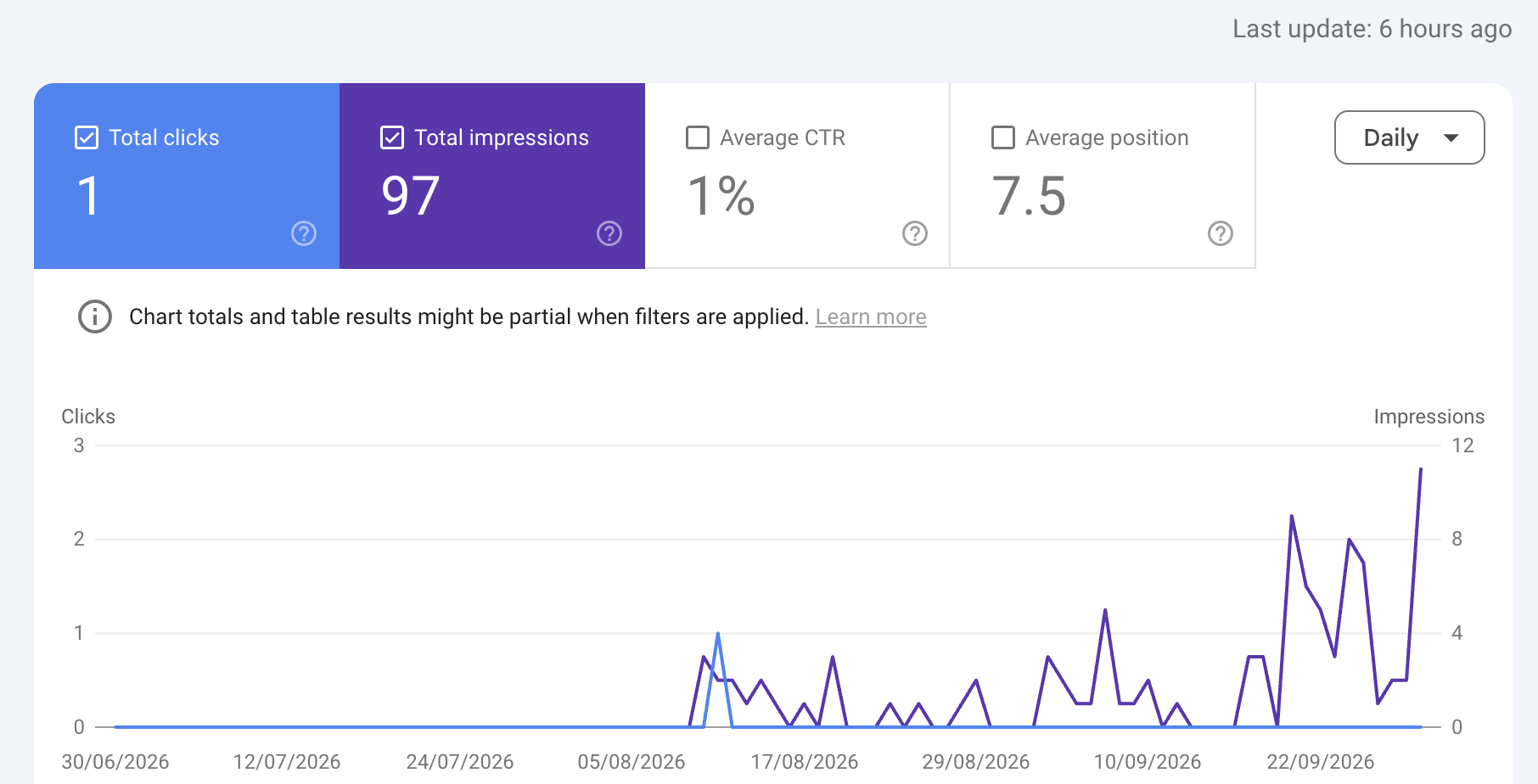
But the conversation remains available to help the next person with the same question. As useful discussions accumulate, so do the opportunities for people to discover the community. That archive can compound in value over time; traffic growth is not automatic.
For the operating steps behind that process, see how to build a community-led customer acquisition loop. It separates search visibility, participation, and actual product interest.
A community I built for the people who used the product
When I was Head of Growth at a media infrastructure company, we built our community for React developers.
The reason was practical. React developers were the people implementing our APIs. If we wanted to understand what was breaking for them, we had to be where they talked about it.
So the community covered what they actually struggled with: configuring open-source libraries like FFmpeg, React integration problems, installation steps. It also had room for things that had nothing to do with us. Members showed off their apps and side projects.
The platform took three attempts. We started on Slack in January 2022, moved to Circle after three months, and migrated to Discourse in January 2023. During our time on Circle, Google's crawlers were having trouble crawling our community pages. We raised a support ticket and received no response for a week. That describes our experience at the time, not a review of Circle today. Jatra didn't exist then.
The community grew rapidly after we moved to Discourse. The business result showed up in sales: we tracked community-attributed inquiries, and larger clients told us that developers active in the community had recommended us to them.
We never set out to build a customer community. It became one because it was built around what those developers cared about, and the people who used the product brought in the people who bought it.
If you already have useful conversations on another platform, our community migration guide covers preserving members, links and existing knowledge when you move.
When to start: smaller than you think
You don't need to wait until the brand is bigger, until there's budget for a full-time community manager, or until there are "enough" customers to make it feel worthwhile.
A founding group of two to five interested people can be enough to test the idea. A founder who answers questions, a few early customers who care about the subject, and a handful of real conversations give you a starting point. They do not guarantee that a community will grow.
The conditions matter more than the number: a shared problem or interest, someone responsible for answering and welcoming people, and time set aside to keep doing it. Our customer community readiness guide helps you check those foundations before committing to a launch.
Booksom's founders opened their community themselves, wrote the first welcome threads, and invited readers in. A small start can help you discover which conversations people actually want to join.
Once you have a useful purpose and someone to own the work, the 90-day B2B SaaS community launch guide takes you through inviting a first cohort and reviewing what happens.
If you're working out how a customer community would fit a B2B SaaS business specifically, see how Jatra works for B2B SaaS.