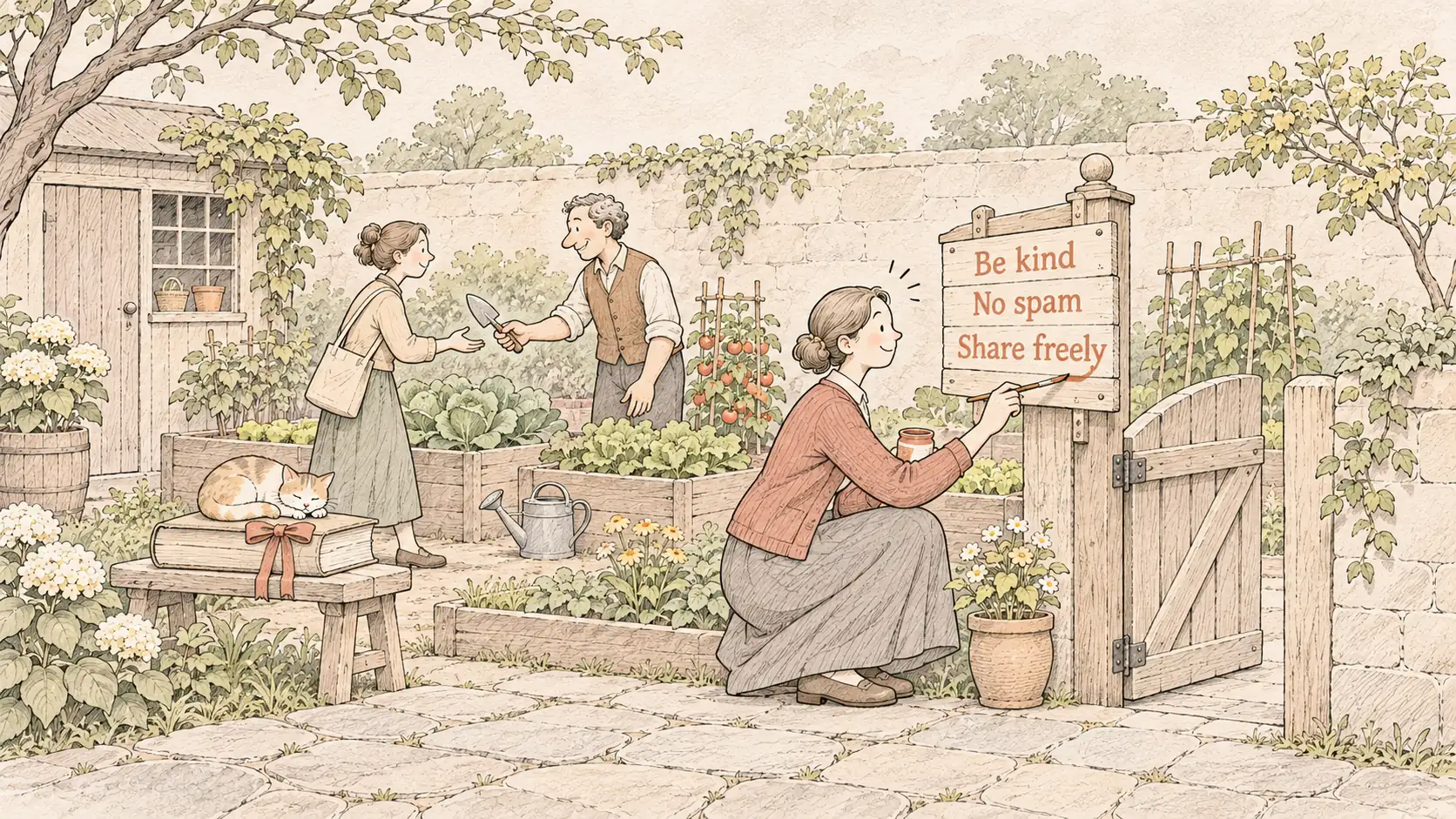

CrazyEngineers never had a rule book. Not in 2005, not in 2015, not today.
We had a few simple expectations, and everyone knew them. Don't advertise. Don't spam. Don't troll. Respect each other. Talk freely about engineering.
Back then we even allowed signatures under every post, and members could advertise their own stuff there, as long as they were writing useful content. What we didn't tolerate was people who signed up only to drop links. We were pretty hard on that. Pure advertisers got banned, and that was it.
That's 400,000+ members, twenty years, and no rule book.
So when someone asks me for a community guidelines template, my honest answer is: you need far less than you think. Here's the template I'd use, a few real examples, and how to make the rules actually stick.
Why long rule books don't work
Many community owners love writing a detailed rule book. Twenty sections. Definitions. Sub-clauses.
Nobody reads it.
It's one of the most common myths in community building, that a well-written rules page changes how people behave. It doesn't. People learn how to behave by being in the place and watching how others behave, and how you respond when someone crosses a line.
People are good by themselves. They don't join your community to cause trouble. Write for the 99% who'll behave, and handle the 1% one by one.
The template: three lines
Copy this. Change the topic. You're done.
Our community guidelines
- No advertising, spam or trolling.
- Respect each other. Disagree with the idea, not the person.
- Speak freely about [your topic]. Relevant views and constructive criticism are always welcome.
That's it. Three lines cover almost everything that goes wrong in a community.
Having none is also fine, by the way. But if your legal team, your boss or your own peace of mind wants something written down, this is the version people will actually read.
Want it tailored to your community? Our free community guidelines generator writes a short version for customer, developer, professional, paid, hobby and brand communities, with your tone and your self-promotion policy.
A few lines you might add for a business community
If you run a community for a company, a couple of extra lines are worth it. Only add the ones that apply to you.
- Share what you've built after you've helped others. No ads, no link drops.
- Don't post private details: yours, your customers' or anyone else's. Account and billing questions go to [support link].
- Team members are marked. Their posts are their own views unless they say otherwise.
Line 4 matters most. I'll come back to it.
Line 5 keeps people from pasting order numbers, invoices and email threads into public posts. It happens more than you'd think.
Line 6 is about trust. Members should always know when they're talking to someone from the company.
Examples worth learning from
Short rules aren't just my opinion. Some of the best-run communities on the internet work this way.
Hacker News's guidelines are about a thousand words, but the lines people remember are tiny. "Be kind. Don't be snarky." That's the culture in five words, and it does more work than any long policy.
Open source is where longer codes of conduct make sense. The Contributor Covenant is a ready-made code of conduct. It says thousands of communities use it, including most of the biggest open source projects. When strangers from everywhere work together on code, with no company in charge, a written process for handling complaints helps.
So here's my rule of thumb. Use three lines for most business, brand and customer communities. Use a full code of conduct if you're running an open source project, or if your legal team insists. Even then, put a three-line summary at the top. That's the part people will read.
The self-promotion rule is the one that matters
Most of the trouble in a business community isn't trolling. It's promotion.
Somebody joins, posts a link to their product, and leaves. Then the next person does it. Within a month your community looks like a classifieds section.
My rule is simple: promote your product, but first create value. Answer questions. Share what you know. Once you've helped people, mentioning what you've built is fine, as long as it isn't a clear advertisement.
That's also why Jatra has no signatures. Signatures are a legacy forum thing, from vBulletin, XenForo and Simple Machines, and frankly speaking, they're the place meant for spam. We left them out on purpose.
You can make the rule enforce itself, too. On Jatra, owners can switch on an option that stops members in their trust window (the first 30 days by default) from adding links and images. It leaves new members no option but to create value first. It's off by default, and members can see when it applies to them.
Where to put your guidelines
A rules page nobody can find is as good as no rules page.
Put them in three places:
- A pinned post in your main channel or on the home page.
- A link in your footer or sidebar, so it's always one click away.
- Your moderation messages. When you remove a post, link the line it broke. That's where people actually read the rules.
You don't need a pop-up that makes people tick a box before joining. Nobody reads those either.
How to enforce them without being the bad guy
Rules are only as good as what happens when someone breaks them.
When a thread gets heated, let it run for a while. It often settles by itself. If it doesn't, ask people to calm down and adjust their tone. If it crosses a line, lock the thread and talk to each person privately.
Talk to them like adults, professionally. In my experience, 90 to 99% of people comply. And if someone still won't, they don't belong in the community. It's super simple. There's no need to complicate it.
When to edit, lock, remove or ban is a whole topic of its own. I've written it up step by step in how to moderate an online community.
Getting guidelines past legal and brand
Inside a company, someone will ask, "Shouldn't legal review the community rules?"
Fair question. At a B2B SaaS company where I led growth, the company's name was on the line, and we still didn't publish a rule book. The community did fine.
What works better is splitting it in two:
- Public: your three to six lines, written for members.
- Internal: a one-page note for your team. What counts as spam, who can remove posts, when to escalate to support, legal or PR, and how fast you respond.
Legal gets the comfort of a written process. Members get rules they'll actually read. Everyone wins.
Rollout checklist
Swipe sideways to see every column.
| When | What to do |
|---|---|
| Before launch | Write your three lines (or use the generator). Add business lines only if they apply. Write the one-page internal note. |
| Before launch | Decide your self-promotion rule, and whether new members can post links in their first weeks. |
| Launch day | Pin the guidelines. Link them in the footer or sidebar. |
| First month | Every time you remove a post, link the line it broke, and message the person privately. |
| First month | Note what actually goes wrong. That tells you which line is missing, if any. |
| Every few months | Reread the guidelines. Cut any line you've never needed. Add one only if the same problem keeps coming back. |
Frequently asked questions
What should community guidelines include?
The basics: no advertising, spam or trolling; respect each other; and a clear statement that people can speak freely about the topic. For a business community, add a self-promotion rule, a privacy line and a note that staff are marked. That's usually enough.
How long should community guidelines be?
As short as possible. Three lines covers most communities. If you need more, put a short summary at the top, because that's the only part most people will read.
What's the difference between community guidelines and a code of conduct?
Guidelines tell members how to behave day to day. A code of conduct usually goes further: what counts as harassment, how to report it and how complaints are handled. Open source projects often use a full code of conduct like the Contributor Covenant. Most business communities only need guidelines.
Do private communities need guidelines?
Yes, but the same short version works. Private communities still get spam, heated arguments and self-promotion. They just happen out of sight.
How do you enforce community guidelines?
Privately and calmly. Let small things settle, ask people to adjust their tone, and lock a thread only when it crosses a line. Message each person directly, link the rule they broke, and talk to them like adults. Most people comply.
Where I'd start
If I were writing guidelines for a new community tomorrow:
- Copy the three lines and change the topic.
- Add a self-promotion line: value first, promotion later.
- Pin it and link it in the footer.
- Write a one-page internal note for your team.
- Enforce privately, and link the rule every time.
- Review it every few months, and cut more than you add.
That's it. The rules don't build the culture. The way you handle the first few problems does.
For the bigger picture of running a community day to day, read how to manage an online community. If you'd like help setting yours up, book a call.