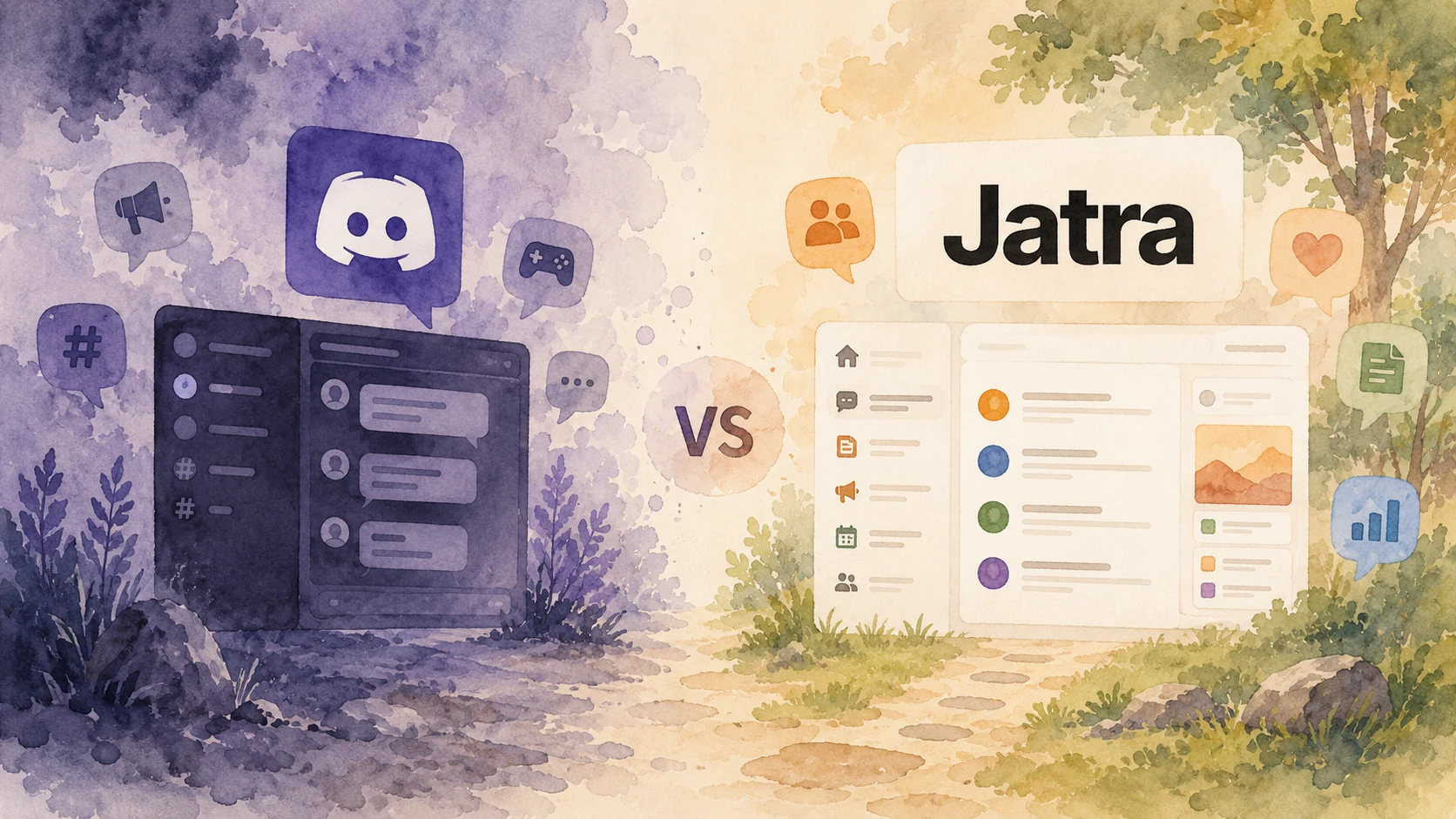
I run Jatra, so you should read this with that in mind. This is not a neutral review of Canny. It is an argument for a different way of collecting product feedback, written by someone who sells that different way. I will concede Canny's strengths openly, link to sources for every claim I make about them, and tell you at the end exactly when you should stay on Canny. Fair enough? Let's go.
The problem I kept running into
A few years ago I was working with the team at Gumlet. They had a feedback board. Nice tool, clean interface, voting, statuses, the works. And here is what actually happened with it: customers would mention a feature request on a support call or in an email, and someone from the product team would go log it on the board on the customer's behalf.
Think about that for a second. The tool built to collect feedback from customers was mostly being fed by the company's own employees, transcribing what customers said elsewhere.
This is not a Gumlet quirk. It is the standard operating pattern for standalone feedback boards, and Canny knows it. Their API has a first-class createdBy field on every post, documented as "The user who created the post on behalf of the author" (source). Their flagship AI feature, Autopilot, exists to scan your Intercom, Zendesk, Gong, and Zoom conversations and log feedback automatically, because customers are saying these things in conversations, not on the board (source).
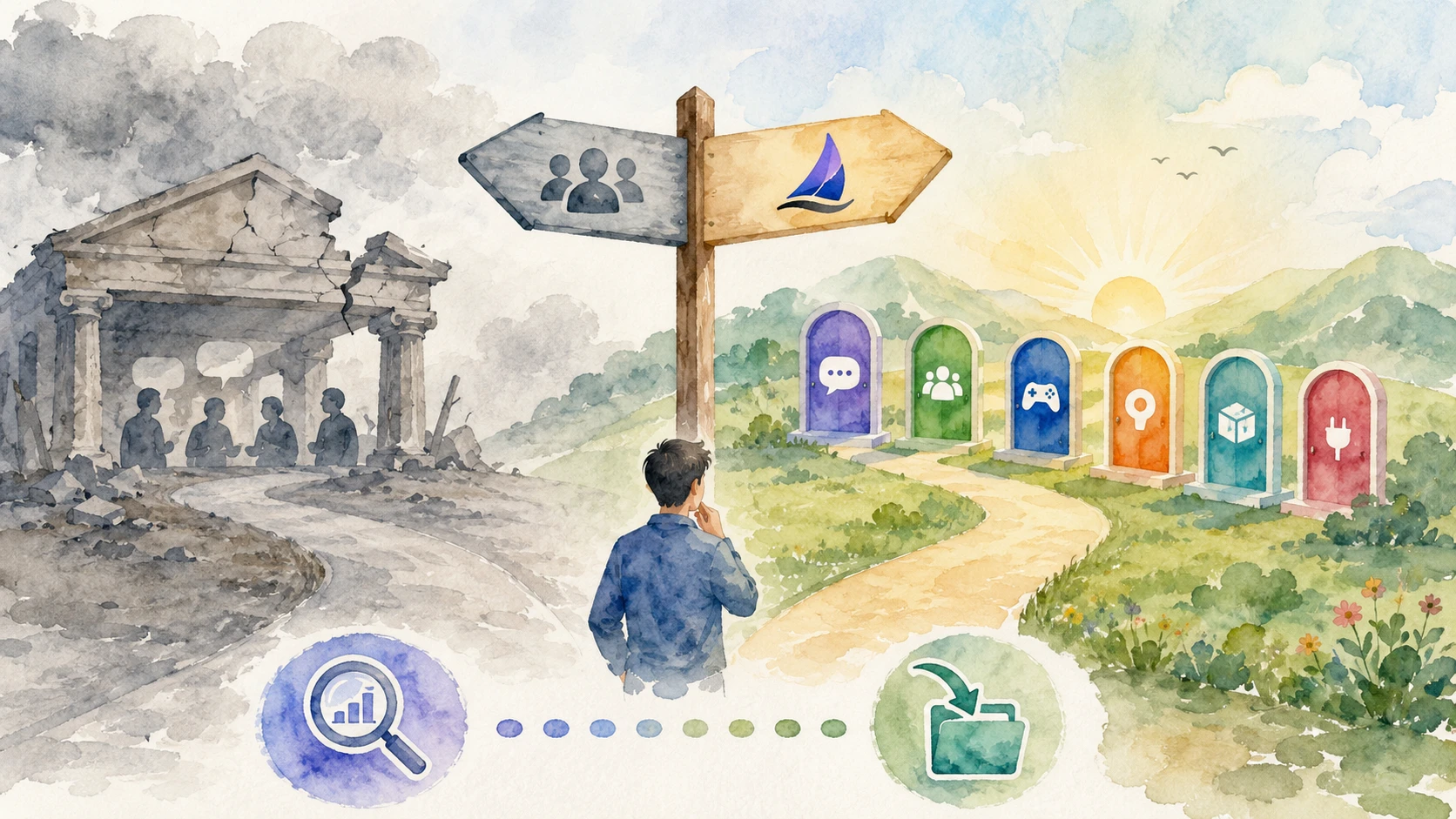
Canny built genuinely impressive machinery to work around a structural problem: a separate feedback destination, behind its own login, gets thin direct participation. My argument in this article is simpler. Remove the structural problem. Put feedback where your users already are.
Quick comparison
| Canny | Jatra | |
|---|---|---|
| Category | Standalone feedback tool | Community platform with feedback built in |
| Feedback boards and voting | Yes | Yes |
| Changelog | Yes | Yes |
| Roadmap | Yes | Coming soon |
| Forum discussions | No | Yes |
| Q&A | No | Yes |
| Articles and knowledge base | No | Yes |
| Jobs board | No | Yes |
| AI feedback capture from support tools | Yes (Autopilot) | No |
| Two-way Jira/Linear/GitHub sync | Yes | No |
| Lives on | Canny subdomain, or a separate feedback subdomain on paid plans | Your own domain |
| Pricing model | Per tracked user, from $79/mo | Flat, from $299/mo |
| Hosting and community management | Self-serve | Fully managed, hands-on support |
What Canny does well
Credit where it is due, because Canny has earned it.
Autopilot is a real differentiator. It watches your support and sales conversations across Intercom, Zendesk, Freshdesk, Gong, and Zoom and turns mentions into logged, deduplicated feedback. Canny reports customers seeing an 80% jump in requests captured after turning it on. If your feedback currently lives scattered across call recordings and support tickets, this is valuable.
The product manager integrations are deep. Two-way status sync with Jira, Linear, GitHub, ClickUp, and Azure DevOps means an idea marked shipped in Linear updates on the public board, and voters get notified automatically. Product teams love this loop, and they should.
And Canny is mature. Nine years in market, founder-led, used by Ahrefs, CircleCI, ClickUp, and Mercury. Read through G2 reviews and the same words keep coming up. Clean. Easy. Set up in a day. It has been around since 2017 and it shows, in a good way. Picking Canny is a safe decision, and I mean that as a compliment.
So why write this article at all?
Because the real feedback is not on the board
Here is what twenty years of running communities has taught me. The most honest product feedback almost never arrives as a neatly filed feature request. It arrives as:
A user asking "how do I export this to CSV?" in a Q&A thread. That is a feature request wearing a question costume.
A frustrated forum post titled "am I the only one who finds the onboarding confusing?" with fourteen replies saying "no, me too." That is a prioritization signal no voting widget will ever give you.
A workaround shared between two users in a discussion. That is your roadmap talking to you.
A standalone feedback board captures none of this, because none of it starts as feedback. It starts as conversation. By the time it becomes a formal request on a separate board behind a separate login, it has been filtered, flattened, and usually transcribed by your own team.
This is the thing I want you to sit with: Canny's on-behalf-of field and Autopilot are not conveniences. They are admissions. They exist because standalone boards under-collect, and Canny compensated with clever software. The alternative is to not have the gap in the first place. When feedback boards, voting, discussions, Q&A, and your changelog all live in one community your users already visit, the question in the forum and the request on the board are two doors into the same room. Your team stops playing stenographer.
I wrote a whole piece on why product feedback, changelog, and roadmap should live inside your community. Read that one if you want me to really go on about it.
The SEO part, stated carefully
Let me first kill a claim you may have read elsewhere: Canny boards are not invisible to Google. They are server-rendered, crawlable, and indexed. I checked live pages myself. Anyone telling you Canny content cannot rank is wrong.
The real issue is where the ranking equity lands.
On Canny's free plan, your board lives at yourcompany.canny.io. Every indexed feedback page builds authority for canny.io, not for you. Pay for Pro and you can put the board on your own domain. Sort of. It goes on a subdomain, feedback.yourdomain.com or ideas.yourdomain.com or whatever you pick, and Google has always treated subdomains as their own thing, separate from your main site. Your feedback content is technically on your domain and practically still in its own silo.
Getting the SEO equity to actually consolidate on your domain takes manual work, and I am not sure most Canny customers know this. Someone filed a request on Canny's own board asking why yoursite.canny.io does not automatically 301 to the custom domain once you set one up. Canny replied that there is a "make primary" button buried in company settings, and clicking it gets you a canonical tag (here is the thread). Not a redirect. A canonical tag. Behind a button you have to know exists. One SEO-minded customer in that thread wrote that they were surprised this does not happen by default. So was I.
Compare that with feedback living inside a community on your own domain, next to your forum threads, Q&A, articles, and changelog. Every discussion, every answered question, every shipped-feature announcement compounds on one property. Your users generate the content, and you keep the authority. The same consolidation decision matters for teams leaving Gainsight, which bundles ideation with forums, events, and customer-success workflows. This is the same structural argument I have made about Slack communities and search and about Discourse: the platform decision decides where two years of user-generated content ends up living, and that decision is very hard to reverse later.
The pricing model, and what "tracked user" actually means
Canny charges per tracked user. Their own definition: "A tracked user is any user associated with feedback."
Read that definition twice, because it is doing a lot of work. A customer who votes once on someone else's idea is a tracked user. A customer whose request your support engineer logged on their behalf is a tracked user. A customer whose feedback Autopilot lifted out of a Zoom call is a tracked user. They never visited the board, and the meter still ticked.
Here is what that means in money, using Canny's published pricing (source):
- Free includes 25 tracked users.
- Pro starts at $79 per month, billed annually, for 100+ tracked users.
- Business is the custom tier for 5,000+ tracked users.
- Canny says you can set an optional monthly spend limit, and feedback from new users stops being tracked when that limit is hit.
I want to be straight with you about the crossover math. If your engaged feedback audience is small, say a hundred active voters, Canny is cheaper than Jatra and will stay cheaper. Jatra starts at a flat $299 per month, and I am not going to pretend $79 is more than $299.
The problem shows up when your feedback program works. Every new voter, every new commenter, every request Autopilot captures pushes you up the meter. Canny's pricing rises with engagement, which means it rises with success. There is a spend cap, but it works by pausing feedback collection once you hit it, which is a strange safety valve for a tool whose job is collecting feedback. Reviewers on G2 and Software Advice repeatedly flag the same thing: tracked-user pricing punishes companies with large free or trial user bases, exactly the companies whose feedback programs are working.
Jatra's flat pricing covers your entire community. Forum, Q&A, feedback and voting, changelog, articles, jobs board, unlimited members, unlimited engagement. The bill does not move when your community grows. I built it that way on purpose, because I have run communities for two decades and I know that the moment you start paying per engaged user, you start quietly hoping fewer users engage. That is a terrible incentive to buy.
What Jatra actually gives a B2B SaaS team
Jatra is not a feedback tool with a community bolted on. It is a community platform where feedback is one native surface among several, all on your own domain, all feeding each other.
Feedback tracking with voting. Users post requests, vote, and follow along, right inside the community they already use. No second login, no separate destination. There is more detail in the announcement we posted when this shipped.
Public changelog. When you ship the thing someone asked for, you get to tell them where they asked. You can see how we run ours at community.jatra.club/platform-updates-releases. Yes, it runs on Jatra.
Public roadmap. Not shipped yet. It is coming, and when it lands it will sit right next to the feedback that built it.
Forum discussions and Q&A. This is where the unfiltered feedback actually happens, as I argued above. It is also the content that ranks and gets cited in AI answers, because it is real users solving real problems in public.
Articles and knowledge base. Long-form content, guides, and documentation, in the same community, on the same domain.
Native jobs board. Your community is your talent pool. Most platforms ignore this entirely.
Fully managed, with hands-on community building. This is the part no feature table captures. I have spent twenty years building and running communities, from large forums on XenForo and vBulletin to a SaaS community on Discourse before building Jatra. When you sign up, you do not get a login and a documentation link. You get someone who has done this before, helping you do it.
Now, the honest limitation. Jatra does not have Autopilot. We do not have two-way Jira and Linear sync today. If you compared feature lists line by line, Canny wins several rows, and I am not going to hide that behind marketing language. But if the community-first approach makes sense to you and a specific missing feature is the only thing stopping you, talk to me directly. Email me. I am Kaustubh Katdare, I founded Jatra, and I still answer these myself. If you need something we have not built, I would rather tell you the real timeline than lose you over a vague maybe.
Who should just stay on Canny
I said at the top I would tell you when not to switch. Here goes.
There is also a middle path: run both. Keep Canny for what it does best, Autopilot capture from support and sales tools and two-way sync with your issue tracker, and use the community for the discussions, questions and announcements around those requests. You pay for two tools and accept some duplicated effort, so this makes sense mainly when the Jira or Linear loop is critical and you also want a public community.
If all you want is the feedback machinery, stay put. Autopilot pulling requests out of Zendesk tickets and Gong calls, statuses syncing both ways with Jira, a few hundred engaged users so the pricing never bites. No community plans at all. That is Canny's home turf. You would be downgrading by leaving it for the wrong reasons.
Move to Jatra if your feedback should be part of a discoverable community on your own domain. If you are tired of your team logging requests on behalf of customers who said the thing somewhere else. If you want discussions, questions, and user-generated content compounding on one property instead of fragmenting across subdomains and third-party tools. If you want a bill that stays flat while your engagement grows.
One tool collects feedback. The other builds the place where feedback happens on its own.
If you are weighing broader options beyond these two, my comparisons of Circle alternatives and Discourse alternatives for SaaS cover the wider field.
Kaustubh Katdare is the founder of Jatra and has been building online communities for twenty years.